

If the Calendar is for not getting blindsided on what you already own, Top Picks is for finding what you should own next. A ranked list of ten stocks our model thinks have the best setup right now.
What the model is measuring
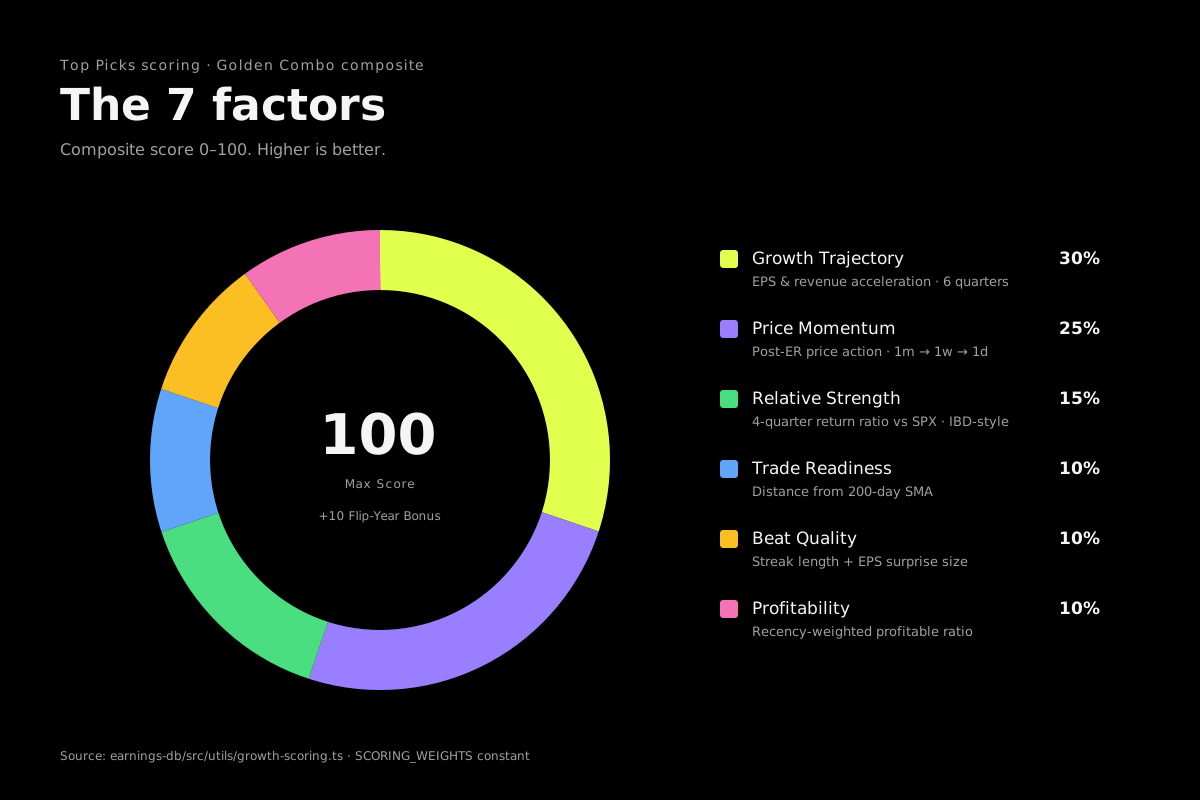
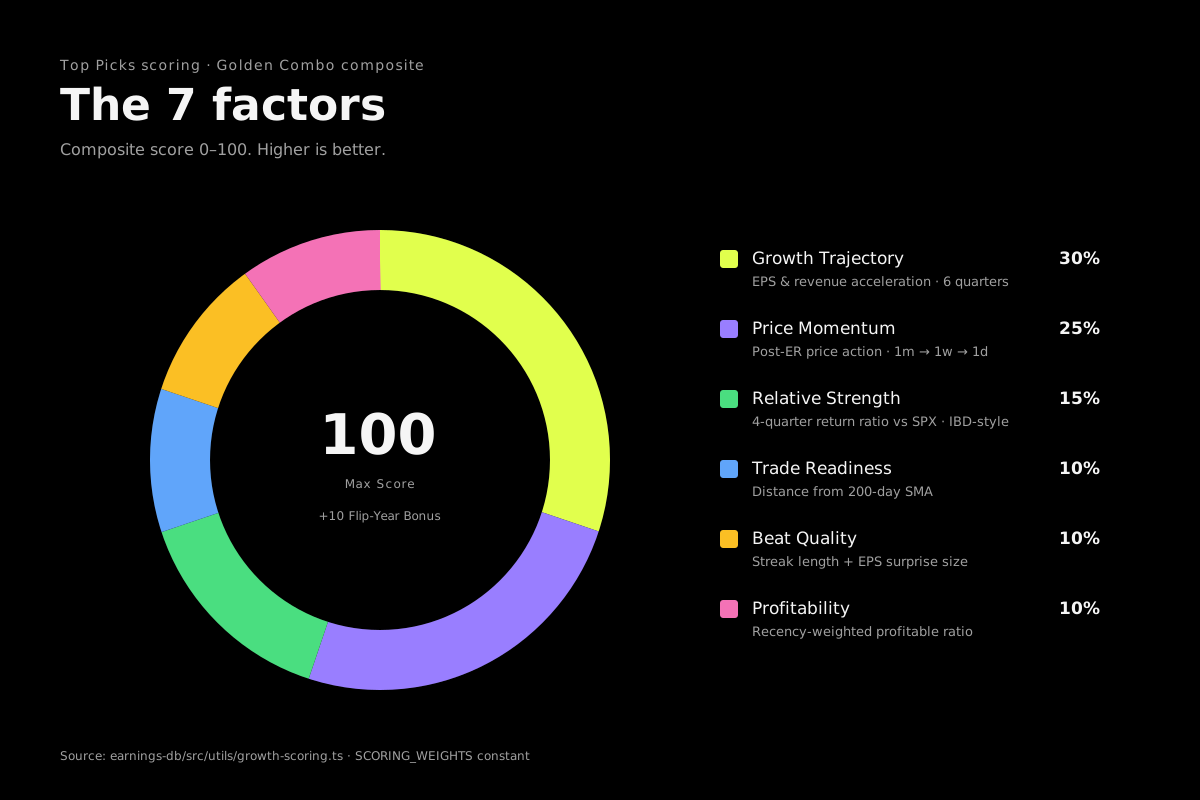
A composite score from 0 to 100 across seven factors:
| Factor | Weight | What it captures |
|---|---|---|
| Growth Trajectory | 30% | EPS and revenue acceleration over the last 6 quarters |
| Price Momentum | 25% | Post-earnings price action (1m to 1w to 1d cascade) |
| Relative Strength | 15% | 4-quarter return ratio vs SPX (IBD-style) |
| Trade Readiness | 10% | Distance from 200-day moving average |
| Beat Quality | 10% | Consecutive beat streak + EPS surprise size |
| Profitability | 10% | Recency-weighted ratio of profitable quarters |
| Flip-Year Bonus | +10 | EPS turning positive after a negative stretch |
A name needs at least two quarters of history to score. Healthcare is excluded by default. Underlying data refreshes after the 6 AM ET cron; the Top Picks endpoint uses a 6-hour Redis TTL.
You see the top 10 split into three sections: a Hero card (#1, full breakdown with AI Insight and a TradingView chart), Additional Strong Picks (#2-5, same evidence layout), and Runner-Up Picks (#6-10).
How to read a single pick card
Each card stacks three blocks of evidence.
Fundamentals — EPS YoY growth, recent post-ER average return, revenue YoY growth, beat rate. Smaller cards also show a beat-streak dot count.
Technical — 200d SMA distance and four SMA pills (20 / 50 / 100 / 200). All green means a clean uptrend.
Institutional — percent held by institutions and a net buyers-vs-sellers count.
Then an AI Insight paragraph that synthesizes the picture. The deeper bull/bear breakdown lives in the AI Report on the Watchlist page — see the Watchlist guide.
The right workflow
Don't trade off Top Picks. Use it as a funnel.
- Scan the 10 picks on Top Picks. What's the sector mix? Anything jump out?
- Click the names that match your style. Short-term traders, look at the high-momentum tech names. Long-term holders, look at the high-profitability compounders.
- Read the evidence cards. Does the fundamentals story line up with the technical position?
- Open the Ticker Detail page for any name you want to take seriously — the Ticker Detail guide covers the history table.
- Add to Watchlist if it survives the deeper look.
- Check the Calendar for when it reports next.
The end-to-end walkthrough lives in Flow — Find the Next Winner.
What the score doesn't tell you
The model is backward-looking. It's pattern recognition on what already happened. It doesn't know about pending regulatory news, undisclosed management changes, geopolitical risk, or options positioning into the next print. Layer those on yourself.
Where the model gets it wrong
Two failure modes:
Thin history names. IPOs and recent spinoffs get unreliable scores. The model needs at least two prints; six is better. Anything under four quarters of history is low-confidence.
Sector regime shifts. When a sector flips from leader to laggard, the price momentum factor lags by a quarter. Cross-reference the Market Model's sector breadth panel (and the Performance guide for the sector cohort context) to catch these earlier.
What's gated
Top Picks is Pro-only. Free users see a blurred preview from your account page. The picks have value precisely because not everyone is acting on them.