

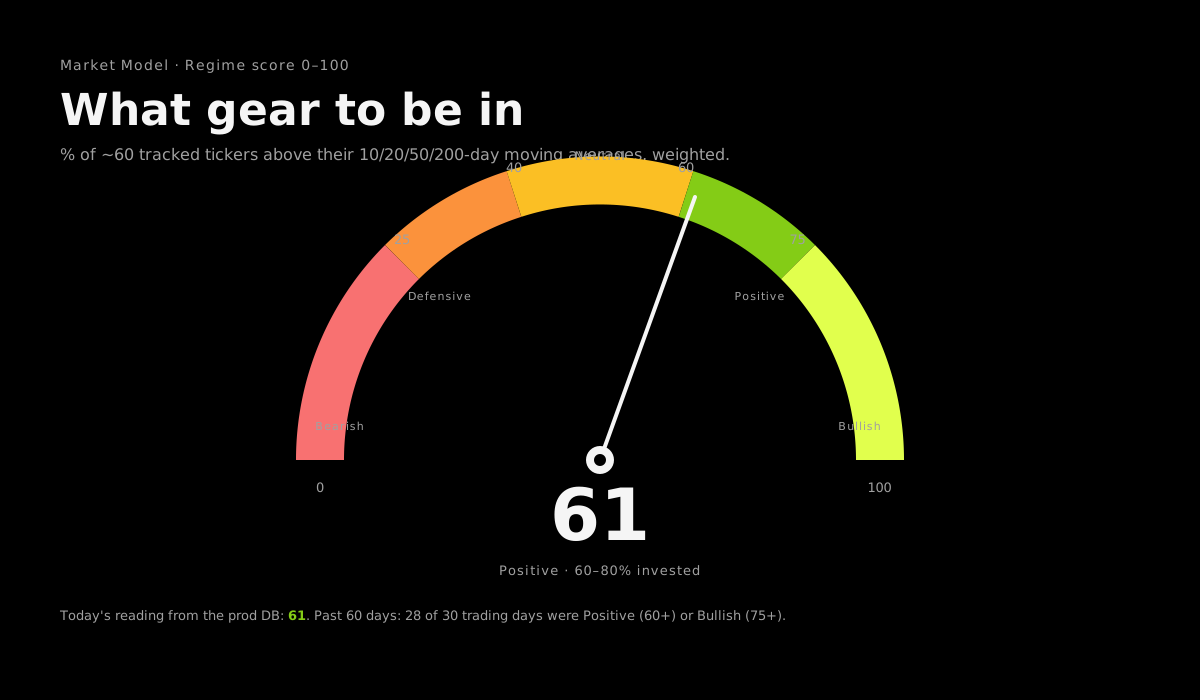
The Market Model tells you what gear to be in. One score, refreshed every 30 minutes during market hours. It sits on top of every individual trade idea you take from the rest of the product.
What it is
A breadth-based regime indicator. We track around 60 tickers — major indices, sector ETFs, industry/thematic ETFs, country funds, commodities, managed baskets — and compute one number from 0 to 100. The score is a weighted average of "what percentage of these tickers are above their 10/20/50/200-day moving averages" with more weight on the 50d and 200d (15% / 20% / 35% / 30%).
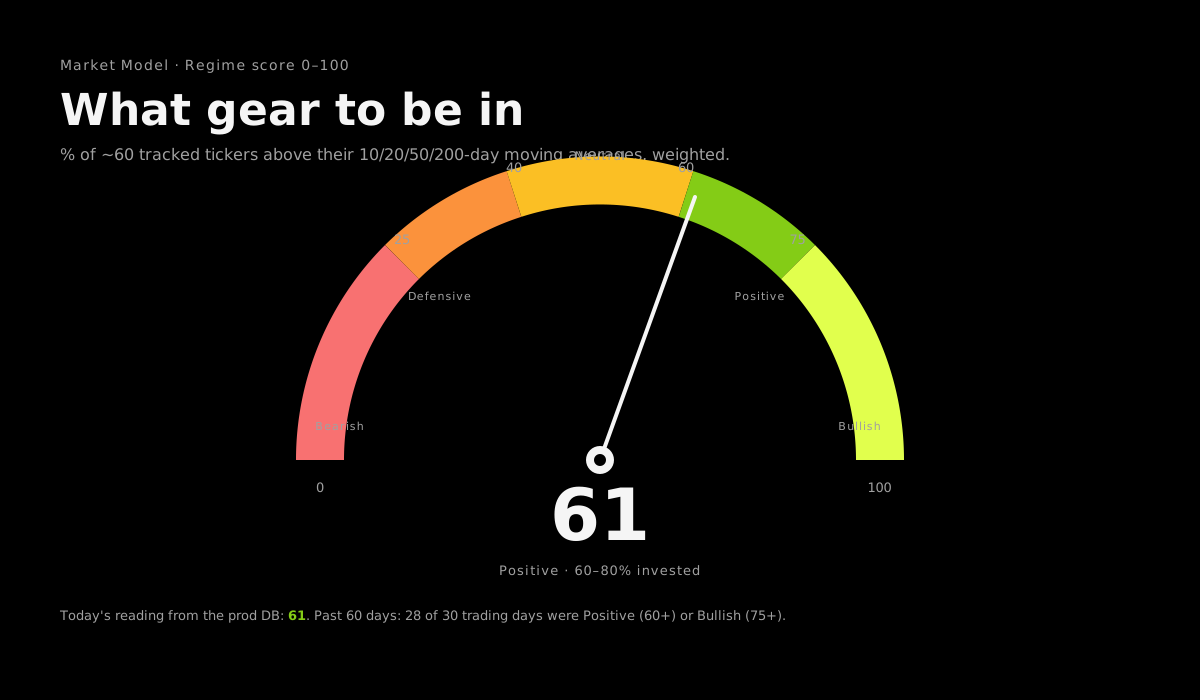
The five regimes
| Score | Label | What it means | Suggested posture |
|---|---|---|---|
| ≥75 | Bullish | Most tracked indices and sectors trending up | 80-100% invested |
| 60-74 | Positive | Broad participation, no major cracks | 60-80% invested |
| 40-59 | Neutral | Mixed signals, sectors rotating | 40-60% invested |
| 25-39 | Defensive | Breadth deteriorating | 20-40% invested |
| <25 | Bearish | Broad trend break | 0-20%, consider hedges |
These are starting points. A risk-tolerant trader can stay aggressive at lower scores; a retired investor probably wants to be conservative even at higher ones. The point isn't the exact allocation, it's having a consistent framework.
What the page shows you
Recommended Exposure — the big gauge with current score, label, and a 90-day chart underneath. The chart matters more than the current number: a 70 climbing for two weeks is very different from a 70 that just dropped from 85.
Market Breadth — new highs vs new lows (from the 10k+ ticker universe), advancers vs decliners, and the 4-stage market cycle (Accumulation, Advancing, Distribution, Declining).
Sector Performance — every sector ranked by absolute performance, ticker count, percent advancing, average and median change. Your sector rotation read.
The full table — all tracked tickers with price, 1d/1w/1m/1y/YTD changes, distance from 52-week high, and SMA positions.
How traders use it
Sizing earnings trades
A clean beat in a Bullish regime usually pops and holds. A clean beat in a Defensive regime often pops and immediately gets sold into. Real data from the last 120 days: when the model has been in Bullish/Positive territory, beats averaged +0.79% next-day and +1.67% one week out. Misses averaged -1.30%. If the model drops into Defensive, that edge compresses fast. Size down. (The Performance guide breaks down the drift edge in more detail — and the Performance page itself lets you slice it.)
Sector rotation
The Sector Performance panel ranks sectors by recent breadth. Recent reads: Energy +5.72% average 1-month return on prints (cleanest sector). Tech runs hot day 1 but fades by month 1. Real Estate has the highest beat rate (60%) but the worst 1-month return — beats are getting punished. Rotate toward what's working.
The "skip earnings season" signal
If the model crosses below 25, the SPX has broken trend, breadth has collapsed, and selling will hit even the best beats. Don't be a hero. Lighten exposure, let the regime resolve, then re-engage above 40. The Find a Winner flow shows how to layer this regime check on top of an individual trade idea.
Stage analysis nuance
Stage 2 (Advancing) is when most of the money is made — be aggressive long. Stage 4 (Declining) is when most of the money is lost — defense only. Stage 1 and Stage 3 are transitions: pay attention but don't bet the farm.
Cadence and access
The job runs every 30 minutes on weekdays during market hours. The page polls every 60 seconds. CDN cache is 60 seconds with 5-minute stale-while-revalidate. The "last updated" timestamp is in ET. The Market Model is free for every authenticated user. It's the layer everyone needs, regardless of plan.