

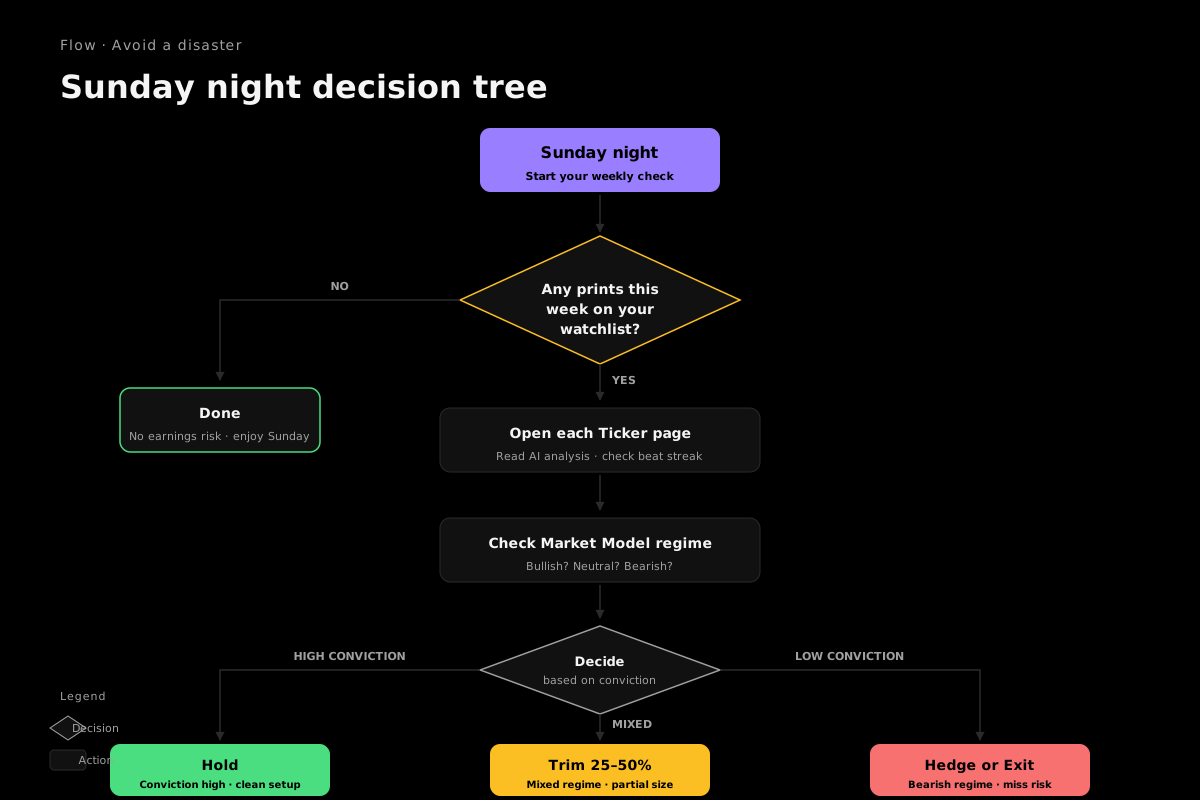
Tracking earnings is also about not getting blindsided on names you already own. This flow protects positions.
The flow in one sentence
Scan your Watchlist Sunday for upcoming prints, sanity-check each one on the ticker page, cross-check the Market Model, and hedge or trim where the setup is poor.
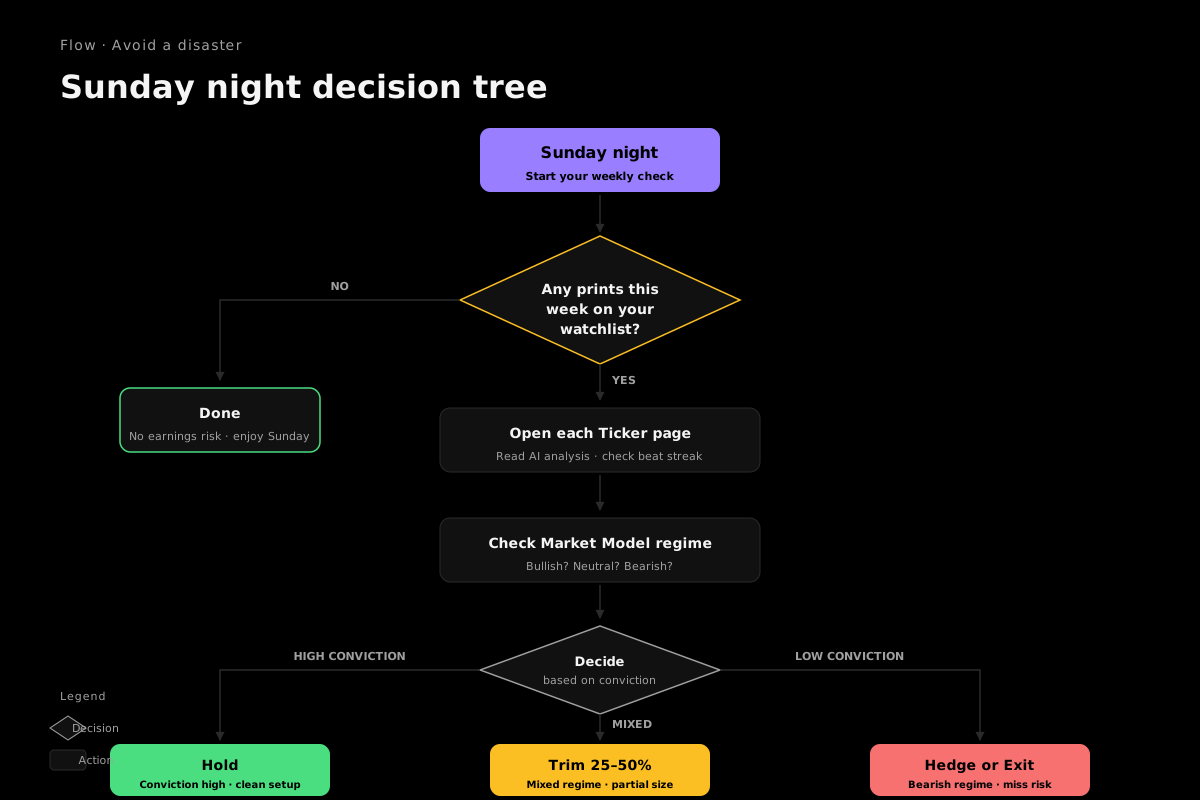
Step 1: Watchlist scan (5 min)
Sort your Watchlist by Next Earnings Date. You're looking for anything reporting in the next 14 days, and anything reporting today or tomorrow as immediate priorities. If nothing reports in the next two weeks, you're done. Come back next Sunday. (See the Watchlist guide for what should actually be on the list.)
Step 2: Open each upcoming print on Ticker Detail (3 min each)
For each watchlist ticker with an upcoming print, scan the earnings history table. You're asking one question:
Has this stock dropped meaningfully on its last 1-2 prints?
If yes, the setup is asymmetric to the downside. Even a clean beat might get sold. Common pattern: a stock already running into the print is set up to disappoint.
Real examples:
- MDB — March 2, 2026 print: -24.4% next day, -23.3% one month.
- DUOL — Feb 26, 2026 print: -21.5% next day, -18.8% one month. After two years of "beats and rips," the pattern flipped.
- NET — May 7, 2026 print: -18.9% next day, -22.2% one week. Software multiple compression hit even on decent fundamentals.
Each of these would have been the biggest loss in a portfolio that month, and each was a stock people had been holding for a year. The ticker page would have shown deteriorating reaction patterns before the print. The Ticker Detail guide covers exactly how to read the history table.
→ Open a ticker page (MDB as example)
Step 3: Cross-check the Market Model (1 min)
Open the Market Model. If the model is Bullish (75+) or Positive (60-74), even mediocre prints tend to get bought. Be lenient. If the model is Neutral (40-59) or worse, even good prints get sold. Be aggressive about trimming or hedging. The Market Model guide breaks down each regime.
Step 4: Take action before the print
Four options:
- Hold full size — pattern healthy, sector strong, model favorable. Most of the time, this is the right call.
- Trim 25-50% — pattern wobbly OR sector weak OR model deteriorating. Cuts tail risk without abandoning the thesis.
- Hedge with options — buy a put spread or short a sector ETF. Best for big positions where you want to keep the cost basis but cap downside.
- Exit entirely — only if multiple signals are red AND the position is the worst in your book. Rare.
The biggest mistake is the silent fifth option: do nothing and hope. That's how -20% prints turn into -40% drawdowns over the following month.
→ Back to Watchlist to act on each name
A real cautionary walkthrough — NVDA Feb 2026, in hindsight
- Calendar: NVDA reports Feb 25 AMC, importance 5.
- Ticker page: Last three prints showed deteriorating reaction. May 2025: +3.2% next day, +17.0% one month. Aug 2025: -3.1% next day, -1.9% one month. Feb 2026: TBD.
- Market Model: Positive range (60s).
- Read: Reaction pattern decaying. Even on a beat, the upside is probably gone. Trim 25-50% or sell deep OTM calls.
- What happened: +0.2% next day, -14.3% one month. A trimmed position would have saved meaningful capital.
That's the discipline. Not magic prediction — systematic pattern recognition on data already in front of you.
The compounder safety check
For long-term holders, the flow is gentler. You're not trading the print; you're stress-testing the thesis. Once a quarter:
- Open each long-term holding's ticker page
- Verify EPS is still growing year-over-year
- Verify the beat streak hasn't broken
- Verify margins haven't compressed
- Verify guidance is still constructive
If 4 of 5 are green, you hold. If 2+ are red, the thesis is breaking and you need to reassess regardless of price.
What this flow does NOT do
It doesn't predict the print (no one does). It doesn't optimize tax outcomes (talk to your accountant). It doesn't manage position size (that's your risk framework). What it does: force you to look at every position before its print and make a conscious hold/trim/hedge/exit decision. That's the discipline most investors lack and most platforms don't surface.
Next
Read Flow — Build a Weekly System. This protection flow becomes second nature once it's wired into a 15-minute Sunday-night routine.